5 common fears in a new D/s relationship


Starting a dominance/submission (D/s) relationship often awakens a mix of excitement, curiosity… and fears that can sometimes be difficult to name. Whether you feel drawn to the dominant role, the submissive role, or you’re simply in an exploratory phase, it’s perfectly normal to have doubts when taking that step.
These fears don’t mean something is wrong. Quite the opposite: they often reflect emotional self-awareness and a desire to experience the D/s dynamic in a thoughtful, respectful, and safe way. BDSM, and more specifically D/s, involves intimate dimensions — power, trust, vulnerability — that deserve to be approached seriously.
Some of these fears are also fed by representations that sometimes stray from reality. If this subject resonates with you, it can be helpful to distinguish between fantasy and relational framework, particularly through the myths around 24/7 D/s that circulate frequently.
In this article we will explore 5 common fears in a new D/s relationship, placing them in their real context: neither idealized fantasy nor alarmist discourse. The goal is simple: to help you understand what these fears say about you, to distinguish normal discomfort from genuine red flags, and to lay solid foundations for a D/s dynamic built on consent, communication, and emotional safety.
Why do D/s relationships generate so many fears?

A D/s relationship is not limited to role play or a sexual preference. It involves a voluntary power imbalance, negotiated and consented to, that touches deeply sensitive areas: trust, vulnerability, attachment, and self-esteem.
Unlike a “classic” relationship, D/s makes explicit the mechanisms that in other contexts tend to be implicit: who decides, to what extent, within what framework and with what boundaries. This bringing to the surface can cause pre-existing fears to emerge that never needed to be articulated before.
It is also important to understand that D/s frequently activates a heightened emotional intensity. The act of giving or receiving power, even symbolically, creates a particular closeness. That intensity can be experienced as enriching, but also as destabilizing, especially at the beginning of a relationship.
Finally, many fears stem from a confusion between fantasy and relational reality. Media or pornographic portrayals of BDSM sometimes give the illusion of total control, permanent submission, or an absence of doubt. In reality, however, a healthy D/s dynamic rests on constant adjustments, regular conversations, and a great deal of emotional clarity.
The fears that appear at the start of a D/s relationship are not weaknesses. They indicate that the dynamic touches deep aspects of yourself and that it deserves to be built with awareness, dialogue, and respect for each person’s pace.
If you feel the need for clear references to get started, these educational resources will help you lay solid and safe foundations.
Fear #1: losing control of yourself or the relationship
Fear of losing control is one of the most common fears when beginning a dominance/submission relationship. It can affect both people drawn to submission and those considering a dominant role. This fear is often tied to a central question: “How far can this go?”
In the collective imagination, D/s is sometimes associated with a total loss of autonomy, permanent obedience, or unilateral control. In reality, a healthy D/s relationship rests on a fundamental principle: power is never taken, it is given. That gift is framed, limited, and always conditional on consent.
Fear of losing control often reveals a deeper concern: that of being unable to protect oneself, of not being heard, or of not knowing how to step back. These questions are legitimate, especially when discovering a dynamic that explicitly plays with notions of power and vulnerability.
It is therefore essential to remember that a D/s relationship does not nullify individual responsibility. Each person retains the right to speak up, reassess their boundaries, and end a dynamic if it no longer suits them. D/s never replaces personal freedom; it is voluntarily inscribed within it.
If a D/s relationship gives you the feeling that you no longer have the right to say no, to ask questions, or to express discomfort, it is no longer a consensual power exchange. Imposed control, emotional pressure, or fear of reprisals are never part of a healthy D/s dynamic.
Understanding this fear makes it possible to transform it into a point of support. By verbalizing it from the outset, it becomes possible to establish clear frameworks: what is negotiable, what is not, and the mechanisms in place to preserve each person’s emotional safety.
Fear #2: not being up to your own role (Dom or sub)
When beginning a D/s relationship, it is very common to feel an inner pressure tied to your role. Many people wonder whether they will be “dominant enough,” “submissive enough,” sufficiently self-assured, or experienced enough. This fear affects both beginners and people with a varied sexual background.
This concern largely stems from idealized portrayals of BDSM. Films, erotic fiction, or pornographic content sometimes project an image of perfectly mastered roles, with no hesitation or awkwardness. In reality, however, a D/s dynamic is built through trial, adjustment, and ongoing conversation.
From a relational standpoint, there is no universal “correct way” to be dominant or submissive. A role is not a performance to be perfected, but an evolving relational stance. Trying to conform to a rigid model can generate frustration and take you further from what genuinely makes sense for you.
In both dominants and submissives, this fear is often linked to impostor syndrome: the dread of being found out, of disappointing the other person, or of failing to meet their implicit expectations. Again, communication plays a central role: clarifying what is expected, what is being explored, and what is not yet known.
Accepting that you don’t have all the answers from the start allows you to build a far more solid foundation. A balanced D/s relationship is nourished by curiosity, patience, and mutual goodwill — far more than by certainties or rigid postures.
Fear #3: saying no, setting boundaries… and letting someone down

In a new D/s relationship, many people fear that saying no or expressing a boundary could undermine the dynamic. This fear is especially present in people drawn to submission, but it can also affect dominants who worry about “doing something wrong” or frustrating their partner.
This concern is often based on a misconception: that a D/s relationship would work better with fewer limits, or that submission would imply total acceptance. In reality, boundaries are what make D/s possible. Without them, there is no framework, no safety, and no lasting trust.
Saying no does not mean rejecting the dynamic — it means defining its perimeter. A clear boundary protects the relationship from misunderstandings, resentment, and emotional harm. It also allows the other person to know how far they can go without fear of causing harm.
Fear of letting someone down is often tied to a deeper difficulty: prioritizing one’s own needs over the desire to please. Yet in a healthy D/s relationship, expressing your own boundaries is an act of responsibility, not a lack of commitment.
Presenting a boundary by explaining what it protects (an emotion, safety, personal pace) rather than what it prohibits helps maintain a fluid, respectful D/s dynamic without creating unnecessary tension.
When boundaries are established from the beginning — and readjusted over time — they become a point of support. They provide a clear space in which trust can grow, where each person knows they can speak up without fear of punishment or rejection.
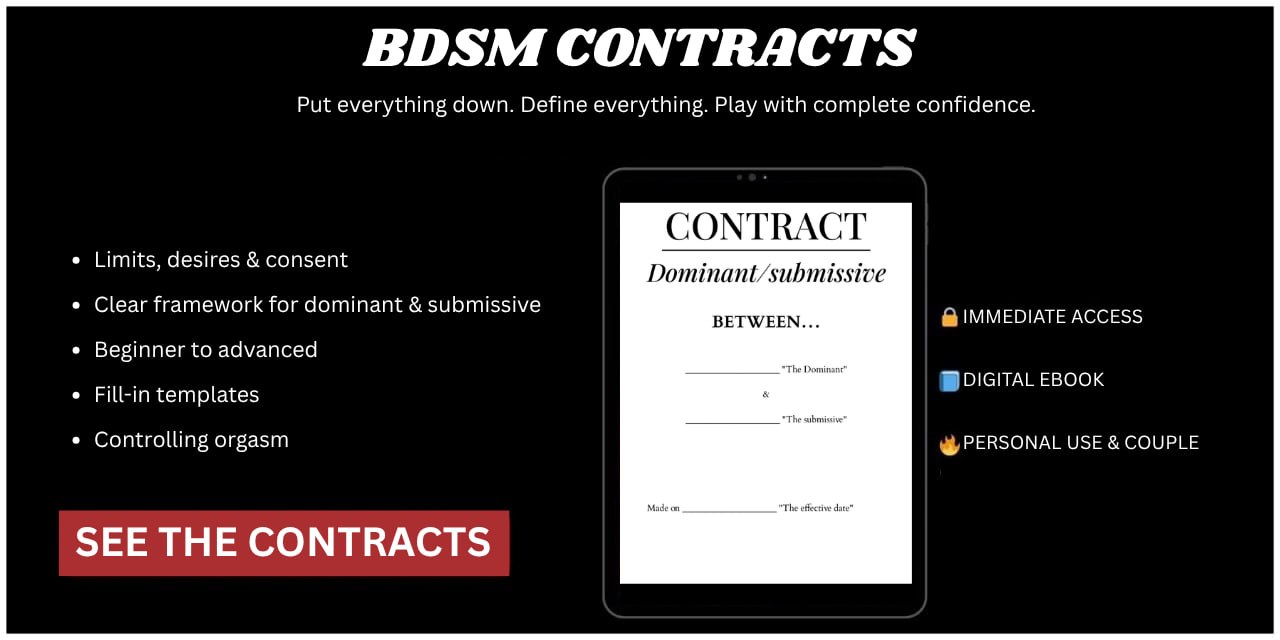
A BDSM contract can help you formalize your boundaries and expectations, so you can move forward within a clear and reassuring framework.
Fear #4: becoming attached too quickly or too intensely
Fear of becoming attached too quickly is common at the start of a D/s relationship. This dynamic can create an intense emotional connection, sometimes faster or deeper than in other forms of relationship, which can feel both intoxicating and unsettling.
D/s activates powerful psychological mechanisms: trust given, relinquishing control, recognition of the other person’s power. These elements can accelerate attachment, especially when experienced for the first time. This intensity is not a problem in itself, but it deserves to be observed with clarity.
It is important to distinguish between conscious attachment and emotional dependency. Healthy attachment leaves room for autonomy, external relationships, and personal reflection. Conversely, a relationship that becomes exclusive too quickly, or that gives the feeling that one’s emotional equilibrium depends entirely on the other person, can generate legitimate unease.
Taking the time to slow down, verbalize your own sensations, and maintain personal reference points outside the D/s dynamic helps regulate that intensity. A relationship built over time gains in depth and stability, without the need to rush through stages.
Acknowledging this fear, rather than denying it, helps preserve emotional balance. It invites you to move forward with care — without giving up connection, but without losing yourself in it either.
Fear #5: not knowing how to recognize red flags
When beginning a D/s relationship, it is natural to wonder whether you will be able to distinguish between an intense but healthy dynamic and a problematic situation. This fear is often fed by the dread of making a mistake, minimizing discomfort, or failing to react in time.
Contrary to what is often believed, relational drift in D/s does not always take a brutal or obvious form. It sometimes sets in gradually, through micro-pressures, imposed silences, or subtle questioning of your own perceptions.
A red flag is not necessarily a serious or dramatic act. It may take the form of a persistent unease, a difficulty expressing yourself freely, or the feeling that your boundaries are being systematically negotiated downward. These sensations deserve to be taken seriously, even when they are difficult to put into words.
If you feel compelled to justify your discomfort, if your emotions are minimized, or if communication becomes one-sided, that is a valid red flag. In D/s as in any other context, repeated discomfort is never trivial.
Learning to recognize these signs sometimes requires time and perspective. Drawing on reliable educational resources, talking with trusted people, or taking breaks from the dynamic can help you regain clarity.
This fear, far from being an obstacle, can become a genuine protective tool. It invites you to stay attuned to yourself and to remember that a healthy D/s relationship is never built on fear of speaking up, but on the ability to be heard.
Transforming fear into a tool for building a relationship
In a D/s relationship, fear is not something to be eliminated at all costs. It often acts as an internal signal indicating that a need, a boundary, or an expectation deserves closer attention.
Rather than trying to mask it or overcome it too quickly, it can be useful to ask what that fear is communicating: is it speaking of a pace that is too fast, a lack of clarity, or a difficulty in articulating your own sensations? This approach makes it possible to transform the emotion into a relational regulation tool.
When fears are shared within a respectful framework, they become a point of support for communication. They open a space for dialogue where each person can adjust the D/s dynamic without calling the attraction or mutual commitment into question.
Learning to welcome these fears contributes to building a more conscious, more stable relationship that is more aligned with each person’s real needs. A mature D/s dynamic is not defined by the absence of doubt, but by the ability to work through it together.
Fears are not obstacles to a D/s relationship. When they are listened to and communicated, they become valuable indicators for adjusting the dynamic and strengthening trust.
To move from reflection to action, these resources offer concrete tools for building a responsible D/s dynamic.
Practical toolkit for starting D/s with confidence
Understanding your own fears is an essential first step. Transforming them into concrete actions then allows you to lay solid foundations for a healthy, evolving, and respectful D/s relationship. This toolkit has been designed to support you through this building phase.
Personal checklist before committing
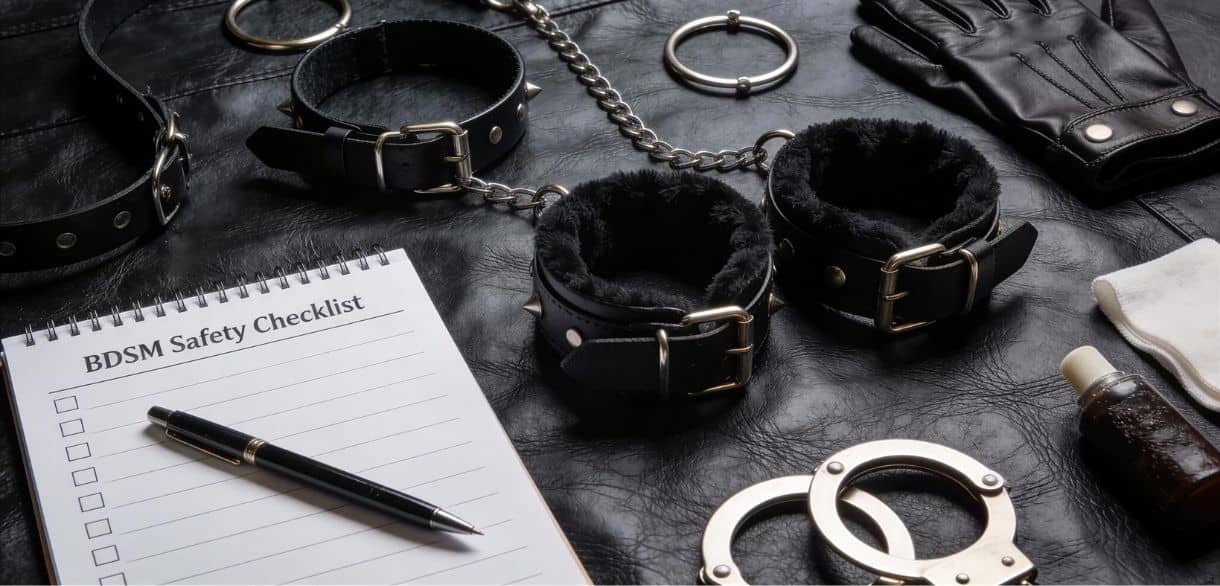
- Have I identified what truly attracts me to D/s (fantasies, needs, curiosity)?
- What are my main fears right now?
- What boundaries are non-negotiable for me, even within a D/s framework?
- Am I comfortable with the idea of regularly communicating how I feel?
- Do I feel I can say no without fear of consequences?
Questions to ask together (Dom and sub)
- What does D/s concretely mean to each of us?
- What pace do we want to adopt at the start of the relationship?
- How do we handle disagreements or moments of discomfort?
- What are our respective needs in terms of communication and reassurance?
A simple script for talking about your fears
“I’d like to share something important to me. Right now I’m experiencing some fears related to D/s, particularly around [name the fear]. This isn’t a questioning of our relationship, but a need to get clarity and feel safe enough to move forward with confidence.”
Emotional preparation for a new D/s dynamic
- Set aside time for conversation outside of play or role sessions
- Don’t try to define everything all at once
- Accept that the dynamic evolves over time
- Maintain personal and relational spaces outside of D/s
Material recommendations
- Written communication tools (journal, shared notes)
- Items that promote comfort and emotional aftercare
- Reliable educational resources on BDSM and D/s
- Safety equipment suited to your level of experience
These tools are not obligations or rigid rules. They are adaptable references, to be adjusted according to your experience, your pace, and your specific needs.
If you want to go deeper at your own pace, a selection of BDSM books allows you to explore D/s dynamics further.
Conclusion
The fears that emerge at the start of a D/s relationship are not weaknesses or signs of failure. They often reflect genuine engagement and a desire to experience the dynamic in a conscious and respectful way.
Whether it is fear of losing control, of not being up to the role, of setting boundaries, of becoming too intensely attached, or of not recognizing red flags — each of these concerns deserves to be heard. They offer valuable insights into your needs, your pace, and your relational expectations.
A healthy D/s relationship is not built in haste or in silence. It rests on informed consent, ongoing communication, and constant attention to each person’s emotional safety. Taking the time to name your fears, share them, and integrate them into the dynamic is one of the cornerstones of a lasting and fulfilling D/s relationship.
By moving forward with clarity, respect, and goodwill — toward the other person and toward yourself — these fears can become true allies. They help you build a fairer, more aligned, and profoundly human relationship.