How to be dominant: A beginner’s guide


If you have recently discovered the world of BDSM and kink, and you want to know how to become a Dom, then this guide is for you.
And not just any Dom — we’re going to show you how to become a good Dom.
In this guide, we’ll walk you through everything you need to know if you’re serious about being a Dom and if you want to improve your D/s relationship with your submissive.
Many men want to be dominant so they can completely possess a woman, making her do whatever they want.
We’re sure you’ve seen those porn videos where the woman is tied up and the guy teases her, spanks her, and asserts himself over her. And she seems to enjoy it.
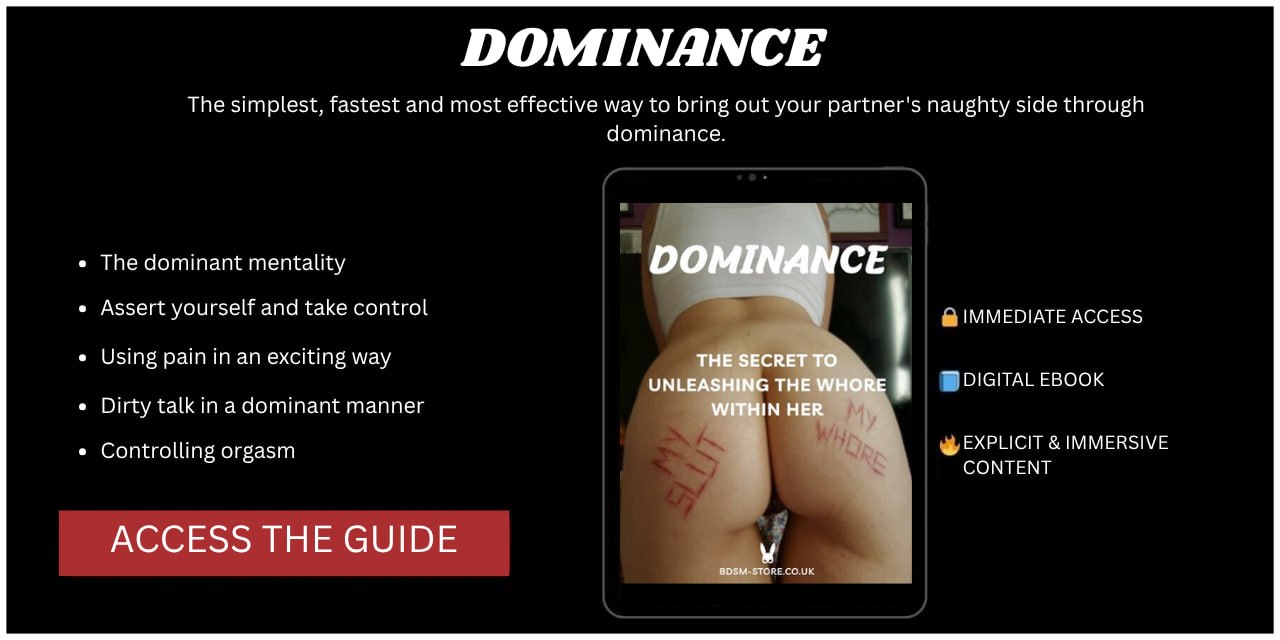
If these ideas inspire you and you aspire to become a seasoned Dom, our mini eBook ‘The Secret to Unleashing the Slut in Her‘ is an essential resource. It’s packed with tips and techniques to sharpen your skills as a Dom and to enrich your D/s relationship with your submissive in a meaningful and respectful way.
What does it mean to be a good Dom?
Can someone consider themselves a Dom if all they do is tie someone to their bed and sleep with them?
We don’t think so. There are far more nuances and subtleties you need to be aware of, and we’ll explore them in this guide.
So buckle up and keep reading for the ultimate guide on how to be a good Dom.
What is a Dom?
A Dom (or dominant) is a man or woman who enjoys playing with another person (or several) who is submissive. The dominant is in charge, directs and dictates what happens, while the submissive follows, serves and enjoys having a lower status.This article is primarily aimed at dominant men, providing tips to deepen their D/s relationships. (A specific article for dominant women is in preparation.)
And by play, we mean sex, but also everyday life, if that is what the participants desire for their Dom/sub relationship.

This power dynamic is largely a role play. Both parties agree to a consensual power difference in the relationship, which either party can end at any time by using a safeword.
If you force your submissive to do something against her will, that is not being dominant — that is abuse.
In articles, you’ll see that a dominant is referred to as Dom (or Domme if female) or with the capital letter “D”. A submissive is called sub, little, or the lowercase letter ‘s’ (for example, D/s means Dom/sub or Dominant/submissive). The capital letter is used to indicate that the dominant is the top (higher status) and that the submissive is the bottom (lower status).
Dominants generally ask their submissives to address them with honorifics such as “Sir”, “Master” or “Daddy”.
What are the types of dominants?

There are many types of dominants. Here are some terms you might hear:
- Daddy Dom. Daddys have nurturing tendencies and appreciate the softer, more tender qualities of caring for another person. They are associated with little girls and provide a paternal-type figure or role model to guide their submissive. The Daddy Dom and little girl dynamic is frequently referred to as DDLG (Daddy Dom Little Girl) or CLG (Caregiver Little Girl). Rules may include imposing a bedtime or limiting screen time.
- Sadistic Dom. A sadistic Dom enjoys inflicting pain on their submissive, who is described as a masochist (and may even call themselves a pain slut if they are not offended by that language). The sadistic Dom will be interested in bondage, spanking, flogging and perhaps even pain inflicted during sexual activity. A sadistic Dom may also enjoy humiliating or degrading their submissive verbally, during sex or when punishing them.
- Master Dom. A Master Dom is associated with a slave or a service-oriented submissive. In this style of D/s dynamic, the master treats their submissive as property and they engage in sexual and non-sexual play. For example, the submissive may be responsible for maintaining the household, preparing dinner or serving as a sex toy for the master. They may engage in slave training where the submissive learns what the Master likes and how to fulfil their duties.
- Owner Dom. An Owner Dom may refer to ownership of a submissive slave, but it can also refer to ownership of a submissive who enjoys acting as a pet. During pet play, the Dom serves the submissive food in a bowl placed on the floor, wears a collar and sleeps in a cage.
- Caregiver/Romantic Dom. Like the Daddy Dom, the Caregiver/Romantic Dom enjoys taking care of their submissive. They help them achieve their goals and may be involved in life decisions, such as the clothes they wear and what they eat.
- Financial Dom. A Financial Dom controls their submissive’s money.
- Rigger Dom. A rigger loves rope, whether for the appeal of seeing their submissive tied up and restrained, or simply for the beauty of rope work.
Why be a Dom?
The best dominants already display dominant behaviour in their everyday lives. It is simply part of their personality to want to get their way, take the lead, maintain control and do things on their own terms.
For this type of person, it is not natural to be in a relationship with someone who wants to give you orders. That kills sexual attraction because the polarity of the power dynamic is reversed.

Being a dominant in a D/s relationship is enjoyable and natural for these types of people, and that increases sexual attraction.
Not only can they express their natural, confident personality, but they can share it with a submissive type who enjoys displays of dominance and who has a natural desire to serve and please. Both personality types come together as powerfully as opposite poles of a magnet.
Being a dominant is NOT about aggression, manipulation or abuse.
You won’t always get what you want. In fact, being the Dom in the relationship often amounts to MORE work, because you now have to look after two people (yourself and your submissive). Just as she is there to serve you and satisfy your needs, you must satisfy hers, without taking advantage of her willingness to please without giving anything in return.
If you’re reading this guide because you want to sit back and have someone obey you 24/7 without having to make the slightest effort, you’re going to be incredibly disappointed.
How to be a good Dom

So, what does a good Dom look like? What do you need to know? Where do you start?
We’ve compiled 11 tips below to help you begin your journey.
1. Learn the lingo
Do you know:
- what D/s means?
- the different types of Dom/sub relationships that exist?
- what Safe, Sane and Consensual means?
- what RACK means?
- what BDSM means?
- what GGG means?
- what it means to be a “switch”?
- what a munch is?
- how to establish limits?
- when to use a safeword?
- the difference between a hard limit and a soft limit?
Were you able to answer all of these questions without looking up the answers? If not, you should get a broad overview of BDSM in its different forms before diving headfirst into the world of domination.
Of course, you can learn as you go, but some additional reading never hurts. Absorb as much information as possible on websites like this one.
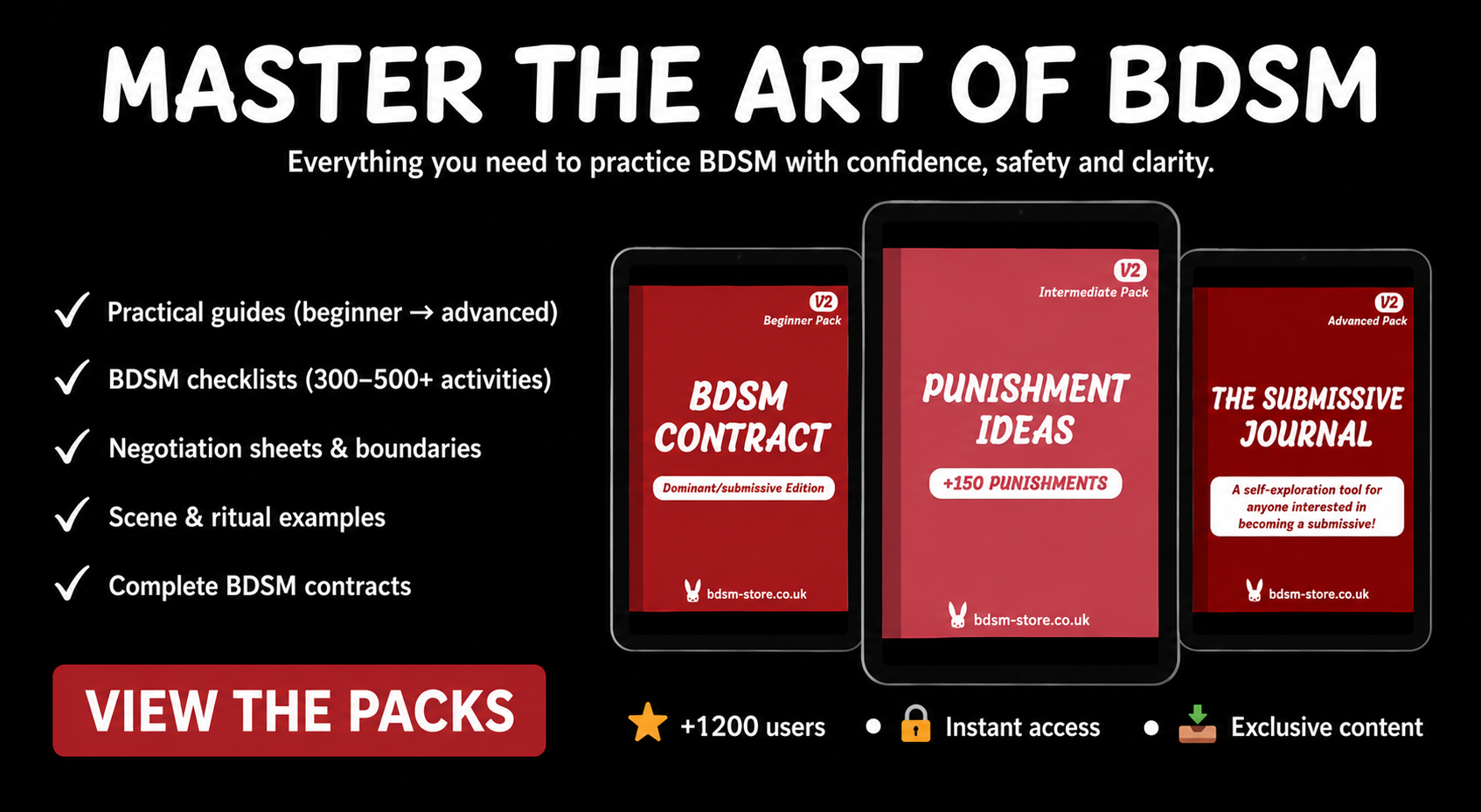
To help you go further and structure your knowledge, we have compiled clear and accessible BDSM resources: guides, contracts, checklists and practical tools to help you start out or deepen your journey in complete safety.
Slang and acronyms are an integral part of the BDSM community. The more you know, the less likely you are to misinterpret what someone else says, and the easier it will be to communicate with other members of the community.
Here are the answers:
- D/s = Dominant/submissive
- Safe, Sane and Consensual is a principle that governs how to engage in BDSM activities ethically. And RACK is the acronym for Risk Aware Consensual Kink. You’ll learn more about these two concepts in the next section.
- BDSM stands for Bondage & Discipline, Dominance and Submission, Sadism and Masochism.
- GGG stands for “Good, Giving and Game”, a term coined by Dan Savage. BDSM practitioners should be good in bed, give equal time and pleasure, and be game for anything (open-minded). More information here.
- A switch is a person who can be dominant in one situation and submissive in another.
- A munch is a local gathering of people involved in the BDSM scene. They are generally held in a conventional setting, such as a bar. Everyone is fully clothed and no sexual play takes place. It’s like any other friendly get-together, except that people are open to talking about kink.
- A limit is a line that you or your partner do not want to cross. For example, choking may be a hard limit for your submissive, meaning that under no circumstances will she want to be choked by you. You must be clear about your limits and respect the limits of others at all times.
- A safeword is used during a BDSM scene to stop play if a hard limit is crossed and all play must stop immediately. You should establish a safeword with your partner before engaging in intense play, including sex, bondage or sadism. Many use the traffic light system. Green means everything is fine. Orange means you are approaching a limit or something is not right, so check in, but play does not need to stop. Red means everything must stop immediately. If your partner is gagged, you should use hand signals as alternative safewords, for example three taps means stop. Safewords are important because some people enjoy resistance play, where the submissive may say “no” or refuse the dominant as part of the scene.
- A soft limit is something a person hesitates about, but may change their mind or give consent under certain circumstances. For example, a partner may not want to give you a rimjob if you haven’t just stepped out of the shower. A hard limit is something the person never wants to do.
2. Stick to the basic principles
Several BDSM philosophies have emerged over the years. They are useful mental frameworks worth knowing and applying.
The BDSM RACK philosophy
RACK is the acronym for Risk Aware Consensual Kink. Some BDSM practices are inherently risky. Masochists enjoy the sting of pain and may end up bloodied or bruised from flogging or impact play. There is danger in practising choking during intense sex, or in restricting blood circulation with a rope.

R.A.C.K. acknowledges this fact and says to go ahead anyway, but with full awareness of the dangers and making sure you have the consent of the person involved.
The BDSM SSC philosophy
SSC is the acronym for Safe, Sane and Consensual. It encourages BDSM activities to prioritise the safer side of things and to only be practised when all participants are in full possession of their mental faculties.
Some of the activities permitted by the RACK philosophy would probably not be considered SSC.
If you are a beginner Dom, go with the SSC philosophy. Only once you have experience should you consider engaging in riskier, potentially dangerous BDSM activities.
3. Determine what you want as a Dom
Domination and submission can take all kinds of forms. Once you’ve done your basic reading, you’ll start to get a sense of the type of dominant you want to be.
Accept that you won’t know right away, and be open to trying different styles. Keep what works for you and drop what doesn’t.
Not everything you read on the internet will necessarily suit you. Don’t think you have to do something simply because another Dom does it.
For example, if you don’t enjoy spanking, don’t do it. That doesn’t make you any less of a good Dom.
We strongly recommend taking a BDSM test (it’s more fun than scientific) and filling out a sex menu to help you determine your domination style.
4. Understand the psychology of submission

Being a good Dom starts in the mind.
We firmly believe that you cannot be a good Dom if you don’t understand the psychology of submission.
The more time you invest in understanding this, the better Dom you will be.
Take the time to understand why a woman would want to be submissive.
5. Help her overcome her insecurities
Society regularly shames women for their sexual desires, making them feel guilty for wanting any kind of sex, let alone kinky BDSM sex.
(If you don’t believe us, trust us — read some books on the subject and talk to women about their experiences.)
To be a good Dom, you must cultivate an environment that allows her to believe you won’t do the same, giving her permission to expose that hidden part of herself.
Everything your submissive needs to become a highly sexual woman who loves sex is already there, ready to be unleashed. Your job is to water that seed, providing the right mental nourishment and a benevolent hand, to help her flourish.
Part of the dominant’s role is to make your submissive comfortable with her sexuality, capable of enjoying everything she wants without feeling guilty.

When a submissive comes to you, you must be able to quickly assess where she sits on the spectrum.
Some submissives are completely comfortable with sex, their body and their fantasies. Others will have issues with all of these topics.
Lead by example.
The more you are able to talk about YOUR desires, YOUR wants and YOUR needs in an open, honest and direct manner, the more she will see that there is no reason to feel ashamed.
6. Own your power
This is something you don’t often hear Doms talk about.
To be a good dominant, you must: resist the social pressure pushing you towards equal power in a relationship; overcome your desire for independence to allow another person the pleasure of serving you; and act with discernment to avoid emotional abuse in your position of power.
And here you thought being a great Dom was all about giving her a smack on the arse!
7. Develop the mental traits of a good dominant
To be a good dominant, you must be:
- Curious. A good dominant is curious about what makes others tick. They are curious about sex and sexuality. They want to explore it with others, without judgment and with an open mind.
- Kind. A good Dom is not cruel, vindictive or manipulative. They are kind, attentive, respectful and want to bring out the best in others. They accept that their submissive will make mistakes and only punishes when necessary. The wellbeing of their submissive is their primary concern.
- Consistent. A good Dom’s behaviour is uniform. The submissive must be able to rely on their rules, their decisions and their logic. A highly strung, inconsistent and reckless Dom is not pleasant to live with. You cannot expect your submissive to know how to act if you react differently in a given scenario. Of course, you can change your mind, but make sure you’ve communicated what you’re thinking.
- Decisive. A good Dom is capable of making rational decisions based on the information provided. When she asks where we’re going to dinner tonight, the answer is not “I don’t know”. A good Dom is a great planner and strategist.
- Others-focused. Being a good Dom is not simply about ordering your submissive to do what you want. You must show empathy, be able to read others well, have an idea of what they expect from the relationship, and incorporate that into your lifestyle and play sessions. Of course, you can give your submissive orders and have her run errands for you, but only if that is what she enjoys doing and if she has given her consent.
To further perfect your Dom skills and enrich your approach to BDSM, our BDSM Resource Packs are invaluable tools. Each one is packed with knowledge and strategies to guide you in the art of domination, making every interaction a memorable and rewarding experience.
8. Improve your communication skills
Communication is the cornerstone of the Dom/sub dynamic. Good communication is difficult and requires a great deal of practice. It is something you must constantly work to improve.
Here are some tips for improving your communication skills.
- Be honest. Honesty is not always easy. But if you want your partner to fully trust you, you must tell them the truth, even if it makes you uncomfortable. Be prepared for your partner to say things that make you uncomfortable, and learn not to let your emotions take over. Breathe deeply and let the feelings wash over you.
- Do regular check-ins. Set aside time each week to sit down and talk about your relationship with your partner. What’s working and what isn’t. Set the power play aside during that conversation. Both of you should approach the subject as equals, otherwise your submissive will simply go along with what you say.
- Listen more. Really listen to what the other person is trying to tell you. Sometimes it’s not the words they use but the underlying message that needs to be heard. Don’t react with anger if they say something that touches a nerve. Acknowledge their feelings, even if you don’t logically agree with what they’re saying. If you help someone feel heard, they will be more willing to listen to your point of view, and you can find a compromise together.
- Avoid judging. Avoid judging what someone says, especially when topics of a sexual nature come up. That would put an end to the conversation, and you’d find yourself in a more difficult position.
9. Improve your body language
Body language is a fascinating and vast subject. People evaluate you before you even open your mouth.
If you’re meeting a woman for the first time, those first few seconds are crucial. Are you the kind of person who puts her at ease, relaxes her and makes her smile, but who also commands respect, gives her strange feelings in her stomach and makes her want to tear your clothes off?

All of that can happen in a few seconds of interacting with you, and your body language makes all the difference.
Here are some tips on assertive, self-confident body language.
- Act naturally. Start by noticing how you walk down the street. Do you lean forward or backward? How do your hips sway? How much do your shoulders roll? Is your back curved or straight? How much do your arms swing forward or backward? Now, study a film in which the lead actor displays dominant body language. Compare how they walk with how you walk. Do you notice differences? Take one aspect of how you walk and modify it to improve it. Repeat the process for every aspect.
- Eye contact. When you talk to someone, are you able to hold their gaze for long periods? You need to be. Being able to look someone in the eyes with confidence while they’re talking to you or you’re talking to them shows that you are not intimidated or nervous. Learn to soften your gaze and smile slightly, so as not to come across as intimidating.
- Minimise movement. Whether sitting or standing, reduce your movements to a minimum. Watch out for unconscious movements, such as bouncing your knee, tapping your foot or drumming your fingers. Don’t do it. They signal nervous energy and are distracting. Reduce your fidgeting as much as possible. And when you do finally move, do so slowly and deliberately. People will give your movements more weight because they occur so rarely.
10. Work on your voice
The way you say something is often more important than what you say.
Did you know that we change the pitch of our voice depending on the social status of the person we’re talking to?
If you talk to someone you perceive as having high social status, you raise the pitch of your voice. The theory says that this signals to the listener that you are submitting, and that you are not a threat to them, to avoid any confrontation.
Dr. Viktoria Mileva, a postdoctoral researcher at the University of Stirling, stated: “A deep, masculine voice appears dominant, especially in men, while the opposite is true for a higher-pitched voice.”

So, if you want to be perceived as more dominant, you should use a lower vocal tone. Don’t try to fake a deep voice — instead, practise vocal exercises or work with a vocal coach to achieve it naturally. Speak more slowly and breathe more deeply.
Here are other elements to keep in mind:
- Volume. Don’t think you need to shout to get your submissive to do something for you. A raised voice signals irritation, aggression and loss of control — the exact opposite of a calm, in-control Dom. Often, a calmer voice is far more effective. For example, suppose your submissive responds cheekily. A raised eyebrow and a calm “Excuse me?” delivered while maintaining eye contact with her works wonders.
- Rate of speech. Slow down the pace at which you speak. Speaking quickly makes you harder to understand and signals nervousness (even if you’re not). So practise speaking in a deliberate, slow and direct manner.
- Pausing and using silence. Only an extremely confident person can pause between their sentences (we don’t like to use silence because we’re afraid of being interrupted — a high-status person won’t be interrupted due to their social conditioning). Don’t be afraid of silence. Embrace it. Don’t fill silence with words just for the sake of it. Yes, it can be uncomfortable, but learn to let silence be.
- Variation. Avoid speaking in a monotone voice. Emphasise certain words by increasing or decreasing the pitch, speed or volume of your speech.
11. Become a god in bed
Most BDSM relationships have a sexual component. The bedroom is the best place to truly unleash your dominance and get her to submit to you.
It was in the bedroom that our journey into domination began, and we assume it’s the same for most couples.
We have a complete guide on being dominant with a woman in bed. We suggest you read that article.

In summary, the key things to remember for dominant sex are to develop both the mental and physical components.
You can read the best sexual techniques in the world, or be the best at pulling hair, spanking or throwing her around the room, but if she doesn’t trust you, doesn’t feel comfortable in your presence, isn’t relaxed or isn’t mentally aroused by you, none of it matters.
Think of sexual techniques as the part of the iceberg visible above the water. The mental components are the 70% of the iceberg below the surface, contributing to its buoyancy.
What do dominants actually do?
You’ve read all the domination tips above. You’ve understood that being a good Dom starts with self-knowledge and knowledge of your submissive, good communication and confidence. You understand that you must master both the physical and mental components.

But what do you actually do with your submissive now?
Well, that’s for you and your submissive to enjoy together.
Ultimately, you can explore every aspect of BDSM.
Here are some suggestions to get you started:
- Fill out a sex menu. You and your submissive should put together a sex menu to find out what each of you enjoys. A sex menu encourages good communication and helps overcome the stigma associated with talking about sex.
- Establish rules. Rules help maintain the D/s power dynamic, but they must be clearly defined. What are your expectations of your submissive? What should she do and when?
- Spank her. Spanking is an essential tool of influence. It brings her straight back to her place as a submissive, reminds her who is in charge, and can also be a foreplay technique to arouse her. Make sure you learn how to spank correctly. Spanking can be light and playful as a bedroom activity, or hard and painful as a form of punishment.
- Tie her up. Experiment with bondage. Not all submissives enjoy being tied up, but in our experience, most do. Buy a set of handcuffs and then restrain her during a sex session.
- Have her do chores. Ask her to run simple errands for you, such as going to the shops, finding fun things to do at the weekend or washing the dishes. These tasks belong more to the master/slave dynamic and do not apply to all D/s relationships.
- Train her. All submissives need a certain amount of training to make sure they know what is expected of them and that they serve their dominant correctly.
- Tell her how to dress. Do you enjoy seeing your submissive in a particular outfit? Then arrange an evening and tell her to meet you at the restaurant in that attire. This is just one of the many dominant commands you can give by text.
Common Dom mistakes
When you start your journey as a Dom, avoid making these common mistakes.
- Raising your voice. You should never have to shout at your submissive. Being dominant is about maintaining control at all times. Getting angry and having a bad temper is the opposite of being in control.
- Trying to be perfect. Whether you’re a beginner or experienced Dom, you will never be perfect at all times. Take your mistakes lightly and your partner will do the same.
- Being too serious. There’s no need to be heavy and intense all the time. You don’t have to approach the subject with the solemnity of a politician announcing bad news. If your personality is naturally jovial and light-hearted, incorporate that into your play. Laugh and have fun with your submissive.
- Doing everything. Being a good Dom doesn’t mean you have to enjoy every aspect of BDSM. Learn what you and your partner enjoy and focus on that.
- Forcing someone to do something they don’t want to do. EVERYTHING you do must be consensual. Never force someone to do something they don’t want to do or that could cause them long-term physical or emotional harm. Remember the Safe, Sane and Consensual (SSC) principle at all times.
- Not acknowledging your own mistakes. If you make a mistake, admit it and apologise if necessary. There is real strength in being able to acknowledge your own faults. It’s sexy and dominant.
- Demanding submission too soon.Some dominants expect their partner to be submissive right from the start. That’s not how it works. You must earn her submission. A submissive must respect and trust you before agreeing to submit to you. Don’t be the idiot who starts giving orders on the first date, or who, after reading BDSM articles, forces their partner to do all the household chores. Communicate and explore as equals, then slowly incorporate increasingly extreme power dynamics.
- Expecting submission outside the bedroom. Not all submissives (or dominants) enjoy submitting in everyday life, and you should not expect them to. Some submissives want to be treated roughly during sex, but return to equal power status afterwards. Others want an unequal power dynamic 24 hours a day.
- Poor communication/not being clear about what you want. If you don’t clearly communicate your desires, if your rules are too complicated or if you haven’t written them down, you cannot expect your partner to follow them. Consider drafting a BDSM contract for added clarity.
- Domineering rather than dominant. Know the difference and don’t be domineering.
Are you really a good Dom?

It’s not always easy to know whether you’re a good Dom.
You may want to review the history of your interactions with submissive women and be brutally honest with yourself.
- Did they sleep with you once and never come back?
- Do they usually stop responding to your messages?
- Do conversations on dating apps grind to a halt the moment you tell them you’re a Dom?
If you answered yes to any of the above questions, you may not be a great dominant.
However, also keep in mind that some people may simply not be interested in BDSM, and that’s perfectly fine.
Go back over the tips on how to be a good Dom above. Give yourself an honest audit. What can you improve on? What are the things you’re lacking and need to work on?
Write them down and pick one you’re going to improve on this month. Make it your priority for the next 30 days. Be conscious of it every day. That alone will help you improve. Reassess the situation after 30 days and decide what you’re going to work on next.
Conclusion on how to be a good Dom
As you can see, being a good dominant covers many, many different topics. You must have a solid understanding of psychology, your own mental state and your submissives, be a master of body language, great in bed, command respect, and basically have everything under control in every aspect of your life.
We hope this hasn’t put you off.
All that hard work is worth it. Being a Dom and being involved in a D/s relationship is incredibly rewarding, and you’ll have the opportunity to meet many like-minded and interesting people along the way.
Take your domination to the next level with our mini eBook ‘The Secret to Unleashing the Slut in Her‘, perfect for those looking to refine their mastery in a D/s relationship.